Ruach Flow? What's that?
What the Hebrew word Ruach means, and why our studio gives a flowing, breath-centered class that name.
October 15, 2026 · 4 min read
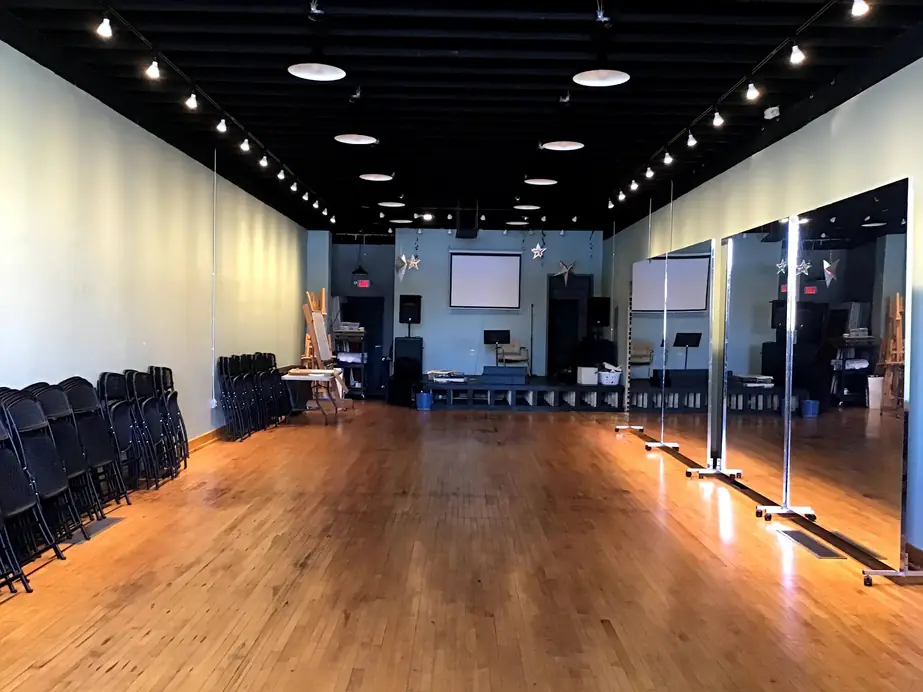
If you've seen Ruach Flow on our class list, you may be asking the same two questions people ask us at the front desk. What does Ruach mean? And why would a Christian dance studio offer an alternative to yoga? Both are fair questions. Here is the thinking behind the name, in plain language, along with what to expect if you're curious enough to try a class.
Where the name comes from
Ruach is a Hebrew word that means breath, wind, and Spirit. It appears in the Bible almost 400 times in the original Hebrew text, and its very first use is in the second verse of Genesis: “The Spirit of God [Ruach Elohim] was hovering over the waters.” Ruach is also the word used in Genesis 2:7, when God breathes His own breath into man's nostrils and gives him life. Job speaks the same way, describing the life within him as the breath, the ruach, of God in his nostrils.
So when we call a class Ruach Flow, we're pointing at something far older than any workout trend. Breath is not a technique we invented. It's a gift, and in the language of Scripture it's connected to the very Spirit of God. That is why the word felt right for a class built around fluid movement, steady stretching, and deliberate breathing.
Why a Christian alternative to yoga?
Let's say clearly what we are not saying. There is nothing ungodly about fluid movement, about the commonly known benefits of stretching and strength, or about structured breathing. God is the source of all good things. As James 1:17 puts it, “Every good and perfect gift is from above, coming down from the Father of lights.”
Our concern is with the name and its roots. Yoga is a Hindu spiritual and ascetic discipline, and this ministry's conviction is that the exercise itself isn't the issue, while the religious connotation attached to the word is. From the garden of Eden on, a familiar pattern has played out: something beautiful and harmless that God made gets picked up and turned into a vessel for something else. By changing the name, we acknowledge that the ancient Eastern religious meaning of the word is not ours to carry, and we dedicate this exercise back to Elohim, the Creator God.
One of the main aspirations of this ministry is to see God's will done on earth as it is in heaven (Matthew 6:10). We also know this is a statement that can sting, even for some Christian readers, and that friendship with the world is a weighty subject (James 4:4). We would rather tell you honestly where we stand than keep quiet and let you wonder.
Breath, energy, and the Holy Spirit
One small example shows how differently the two traditions think. In Sanskrit, the language of the Hindu scriptures and the source of much yoga vocabulary, alternate nostril breathing translates to a phrase meaning “subtle energy clearing technique.” The idea is that there is a subtle energy inside you that needs to be cleared.
Paul describes something different in Colossians 1:29, where he says he strenuously contends with all the energy Christ so powerfully works within him. For a believer, the energy to strive with isn't something to clear away. It's the Holy Spirit of God, the same power that raised Jesus Christ from the dead, the Ruach Yahweh (Isaiah 11:2, Isaiah 42:1). When you breathe slowly in a Ruach Flow class, that is the thought we hope you carry with you: this breath, and the strength behind it, are gifts from the Lord.
What a flow-style class is like
In general, a flow class links gentle, connected movements together with steady breathing. It moves at a calm pace, and no one expects you to already be flexible or strong. Adults are welcome, and so are people who haven't exercised in a long while. If you have a particular injury or health concern, talk with your doctor first and let your teacher know before class begins, so they can suggest ways to adjust.
A few simple things can help your first class go smoothly:
- Wear comfortable clothing that lets you stretch and breathe without tugging or pinching.
- Bring water, and arrive a few minutes early so you aren't rushing in out of breath.
- Move at your own pace. Flow is about steady breath and smooth transitions, not about going deeper or faster than your body is ready for.
- Ask questions. If a movement is unclear or uncomfortable, your teacher would much rather adjust it than have you push through.
- Come with an open heart. The quiet in the room is a good place to pray, give thanks, or simply be still.
A quiet corner of a busy dance studio
Most days our studios are full of tap shoes, tutus, and the happy noise of young dancers, so stillness may surprise you. But breath and movement belong together, whether it's a ballet student breathing through a long adagio or an adult stretching on a mat. Whether we're leaping, tumbling, or breathing slowly, we're trying to honor the One who gave the body breath in the first place.
If this is the kind of class you've been looking for, or if you simply want to ask us more about the thinking behind it, we'd love to talk. New students are welcome to take a free trial class, and you can call us at (517) 759-5554. You can also read about the class on the Ruach Flow and Fitness page at /services/ruach-flow-and-fitness.
Great Commission Studios, (517) 759-5554
Call (517) 759-5554More articles
Art and Soul: Empowering Children with Disabilities Through Dance
How parents can nurture creative expression in a child with learning differences, and where dance fits in.
Meaningful Ways to Serve Your Community and Beyond
Ideas for serving close to home and far away, and a real volunteer need at Great Commission Studios.